

Headshot
Cropping
Standards
A source-based breakdown of current casting expectations, presented through the realities of modern digital submission.
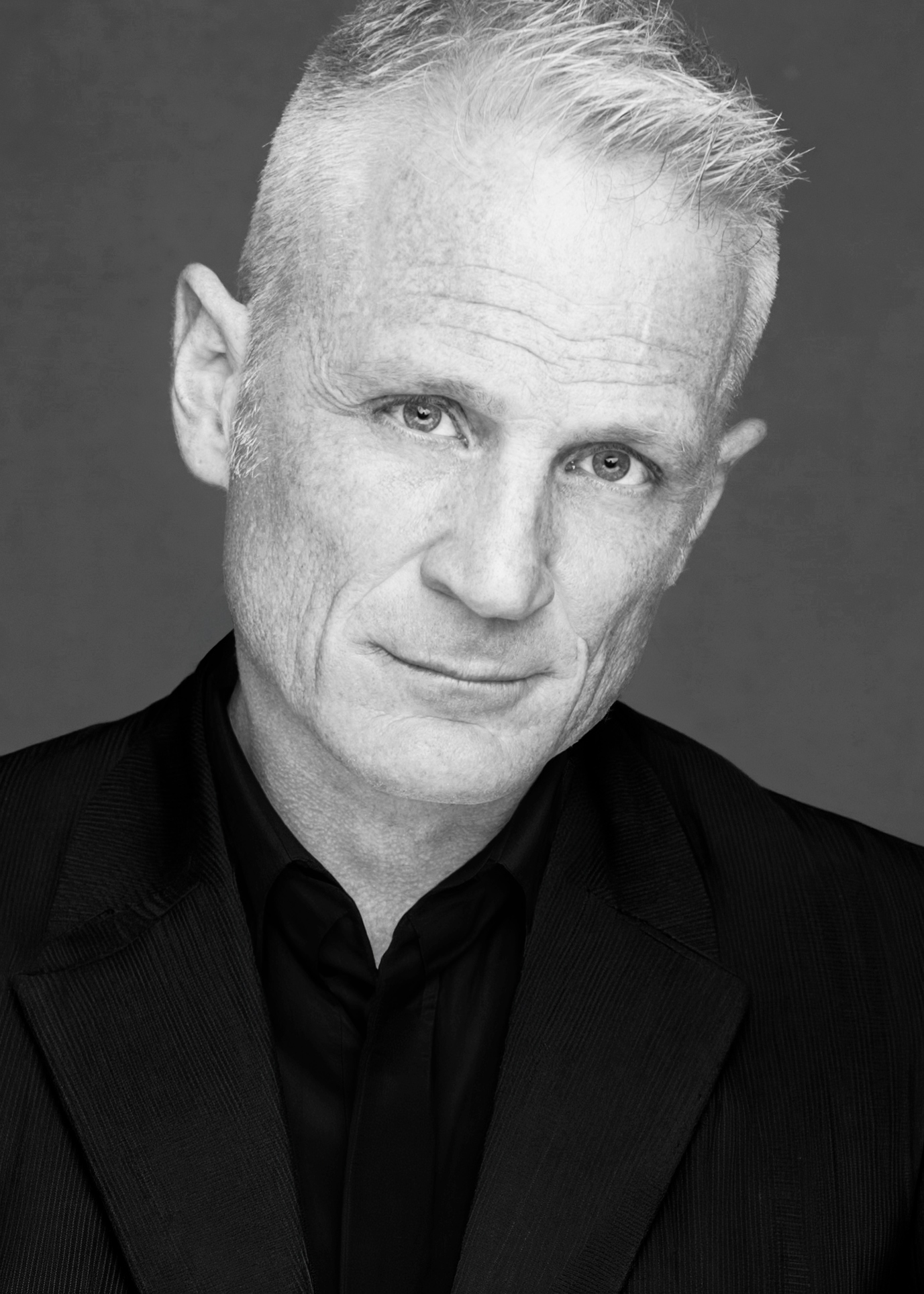
Headshot cropping is often discussed in rigid, oversimplified terms. However, when you look at guidance from casting directors, casting platforms, and industry-facing educators, a different pattern emerges: there is no single prescribed crop, but there are consistent functional requirements.
This document consolidates those requirements and clarifies where common misunderstandings occur.
The Viewing Context:
Thumbnails and Speed
One of the most consistently overlooked realities is how headshots are actually viewed.
Casting submissions through platforms such as Actors Access and Casting Networks are typically presented in grid-based interfaces, where images appear initially at reduced sizes.
Casting director Bonnie Gillespie has repeatedly emphasized in industry talks and published guidance that:
Casting decisions often begin with very small images, viewed quickly, sometimes only for a moment before moving on.
Implication: cropping decisions are not evaluated at full resolution first. They are evaluated based on whether the image reads immediately at a reduced scale.
This alone undermines many traditional assumptions about leaving generous space or adhering to print-era proportions.
Core Evaluation Criteria
Across casting directors and educators such as Margie Haber, the function of a headshot is described in consistent terms:
- It must show what you actually look like
- It must communicate casting type
- It must allow for rapid evaluation
Notably absent from this list:
- Exact crop ratios
- Fixed head-to-frame measurements
- Standardized spacing above the head
Cropping is not judged independently. It is judged based on whether it supports or interferes with these goals.
“Do Not Crop the Head”
This phrase appears frequently in casting advice, but its meaning is often misinterpreted.
When casting professionals say:
“Do not crop the head”
They are not referring to a specific margin of space above the subject. They are referring to visual integrity, specifically:
- The hairline must remain intact
- The natural contour of the head must not be cut off
The concern is perceptual, not technical. An image where the head appears truncated can feel incorrect or distracting, even if only slightly cropped.
Cropping Above the Hairline
This is where the nuance matters. Across casting guidance and submission standards:
- There is no explicit rule requiring a fixed amount of space above the head
- There is no universal prohibition against tighter framing above the hair
The boundary is not simply the top of the frame. It is the hairline and the perceived completeness of the head.
This leads to a practical distinction:
- Cropping into the hairline is consistently discouraged
- Reducing excess space above the head, while preserving the hairline, is generally acceptable
The determining factor is whether the image still feels natural, still preserves the subject’s full presence, and does not appear artificially constrained.
Framing Range:
Face vs. Upper Body
Casting professionals do not enforce a single crop type.
Accepted framing includes:
- Tighter crops emphasizing the face
- Moderate crops including shoulders and upper torso
Both are widely used in professional submissions. The choice is situational, depending on role type, submission context, and how the image reads at small scale.
The consistent requirement is clarity of the face, not uniformity of crop.
The Decline of 8×10
as a Functional Standard
The 8×10 format originated from physical submission requirements.
Modern casting workflows have shifted almost entirely to digital platforms such as Actors Access and Casting Networks.
These platforms:
- Accept multiple aspect ratios
- Display images responsively across devices
- Prioritize usability over print formatting
There is no longer a consistent requirement that images be composed specifically for 8×10.
In practice, composition is now driven by how the image reads on screen, how it performs at thumbnail size, and how clearly it presents the subject.
What Actually Causes
a Headshot to Fail
Across casting commentary, images tend to be rejected or overlooked when:
- The face is not immediately clear at small size
- The composition feels awkward or distracting
- The subject appears inaccurately represented
- The framing interferes with quick evaluation
Failure is not typically attributed to violating a specific crop ratio, but to failing these functional criteria.
What Matters in Practice
When examined through primary casting guidance, headshot cropping is not governed by rigid technical rules.
Instead, it operates within a set of consistent principles:
- Images are first seen as small thumbnails
- The face must read instantly and clearly
- The hairline should not be cropped
- The head must appear complete and natural
- Framing is flexible when these conditions are met
- Traditional formats like 8×10 are no longer central to evaluation
The effectiveness of a headshot is determined not by adherence to a fixed crop, but by how well it functions within the realities of the casting process.
If you need new acting headshots that reflect current casting expectations, view headshot sessions and booking details here.